Description
Oil on stretched canvas
122x46cm
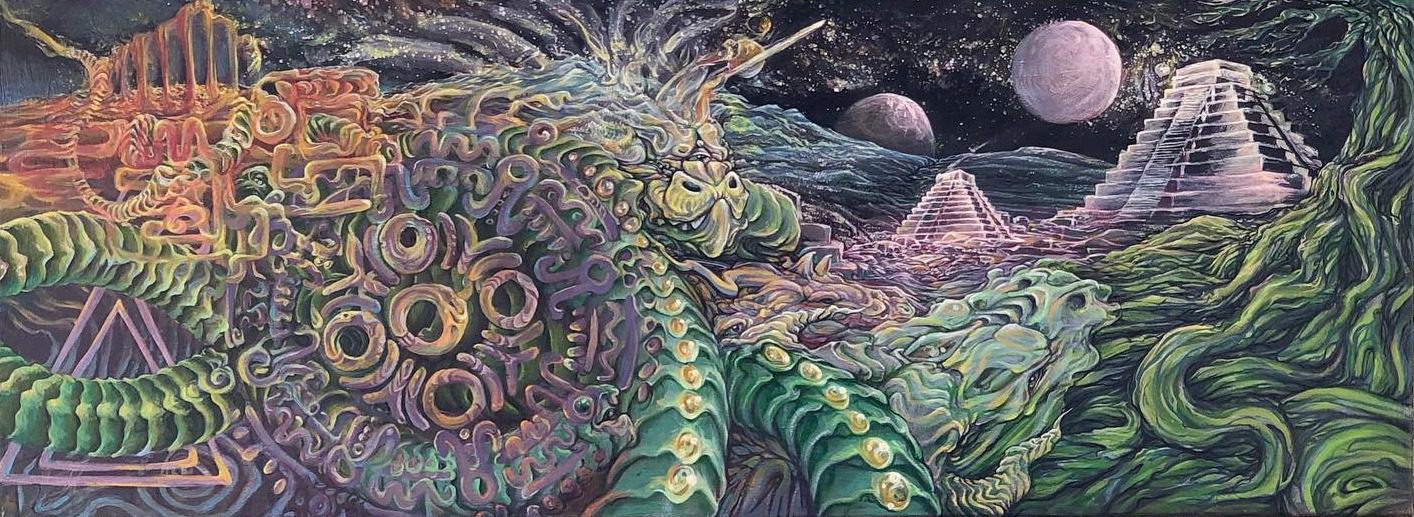
Dream Wheel, an oil on canvas from 2020, measuring 122 x 46 cm, is a profound meditation on the cyclical nature of existence, deeply inspired by the rich histories and mythologies of South America, particularly Mayan, Aztec, and Toltec cosmologies. This painting is a vibrant tapestry of cosmic cycles and earthly journeys, where the tangible textures of life intertwine with the ethereal realm of spirit. It draws from the deep well of Mesoamerican cosmologies, where mythology, technology, ritual, and the cycles of life were not separate domains but interwoven expressions of cosmic order.
At its heart, the work explores the ancient belief in powerful sky and cosmic deities. The monumental stepped pyramids (ziggurats) rise as symbolic mountains – axis mundi – sacred points of connection
linking earth and sky, humanity and the divine.These structures served as altars for profound sacrifices, whether physical, psychological, or spiritual, essential for maintaining cosmic balance, as blood and spirit were believed to nourish the gods, keeping the celestial cycles in motion. Snakes and trees, recurring motifs in the artist’s work, are presented as twin symbols of evolution and rebirth. The snake, rich in Mesoamerican symbolism, evokes Quetzalcoatl – the feathered serpent deity of knowledge, wind, dawn, and rebirth – whose sinuous form mirrors both the undulating path of time and the DNA-like spirals of life.
The snake entwines with the tree – a reference to the World Tree, or Yaxche, in Mayan cosmology – an immense Ceiba whose roots reach the underworld, trunk bridges the human world, and branches ascend to the heavens. The tree, slow and gradual, reaches for celestial heights, while the serpent embodies continuous cycles of renewal, weaving across the painting’s elongated surface.
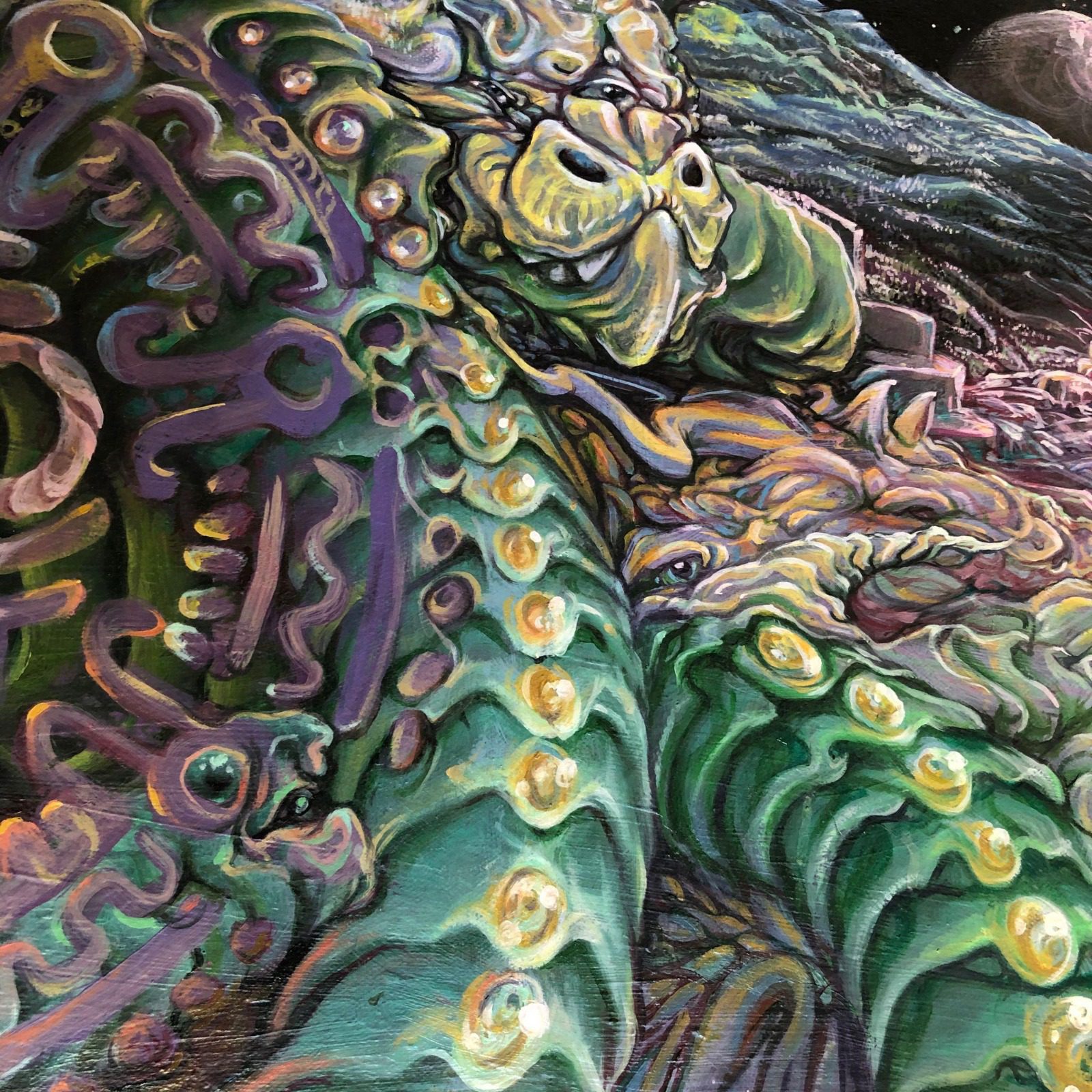
The “wheel” within this vision becomes a cosmic timekeeper, echoing the sophisticated Mesoamerican calendars, such as the Tzolk’in, that mapped time in nested cycles – not linear, but spiraling, ever-returning. The layered texture of the painting speaks to life’s tactile immediacy – that even in a
mythic, dreamlike state, embodiment remains vital. Through its intricate textures, the painting invites viewers to feel the tactile reality of life, even as it suggests a spiritual journey – a profound return to the stars, our cosmic origin. In this visionary landscape, technology, too, finds its place, not as a cold mechanism, but as a focus within the grand, evolving program of the universe, hinting at how our innovations are part of this ancient, ongoing cosmic dance. The painting invites the viewer on an imaginal journey: through ancient wisdoms, toward the stars – suggesting that life itself may be an endless voyage of return to cosmic origins.